


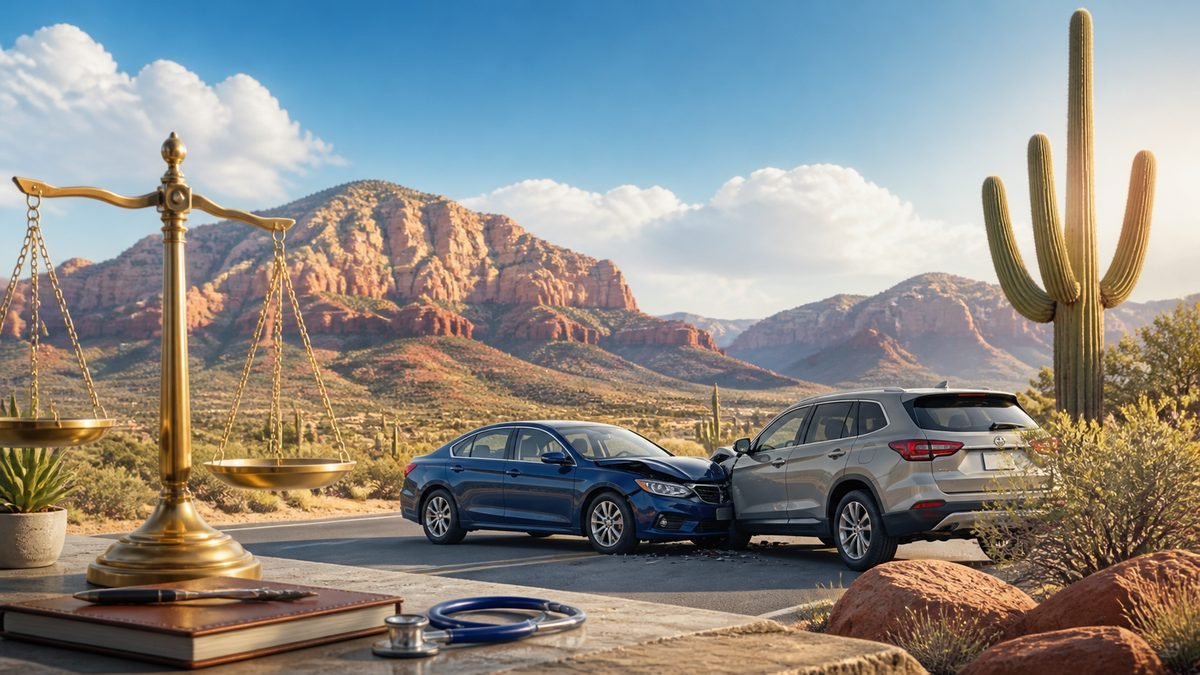
Arizona Snowbird Season Car Accidents: Increased Traffic Risks and Winter Driving Safety in Phoenix
Arizona snowbird season car accidents rise sharply between October and March each year, as millions of out-of-state visitors unfamiliar with Phoenix roads mix with local traffic, creating dangerous conditions that injure thousands of people across the Valley.
- Snowbird season runs roughly October through March, peaking in January and February.
- Greater Phoenix sees some of the highest seasonal population surges in the U.S., adding millions of drivers to local roads.
- Out-of-state drivers unfamiliar with Arizona traffic patterns, freeway interchanges, and desert sun glare are a leading cause of winter crashes.
- Arizona law gives injured victims two years to file a personal injury claim under A.R.S. § 12-542.
- Elmm Law Group helps Phoenix accident victims navigate insurance claims and recover fair compensation.
Why Arizona Snowbird Season Car Accidents Spike Every Winter
Arizona’s mild winters attract an estimated 300,000 to 500,000 seasonal residents to the Phoenix metro area alone, according to data tracked by the Arizona Governor’s Office of Highway Safety. When you add short-term tourists and winter visitors passing through, the daily vehicle count on roads like the I-10, Loop 101, and US-60 climbs dramatically from what local drivers experience during summer months.
Several factors combine to make this season especially hazardous:
- Unfamiliar roads: Drivers from the Midwest, Canada, and the Pacific Northwest are not used to Phoenix’s grid system, high-speed surface streets, or the complex freeway stack interchanges near downtown.
- Slower driving speeds: Snowbird drivers often travel below the posted speed limit, which can cause rear-end collisions on high-speed roads like the Loop 202 or SR-51.
- Rental vehicles: Many seasonal visitors rent unfamiliar vehicles, adding an extra layer of distraction and handling uncertainty.
- Navigation distraction: Drivers relying on GPS in an unfamiliar city are more likely to make sudden lane changes, miss exits, or brake unexpectedly.
- Traffic volume: More cars on the road simply means more opportunities for collisions, especially at peak commute hours.
Arizona Snowbird Season Car Accidents and Sun Glare: A Hidden Danger
Phoenix winters bring one hazard that surprises many visitors: intense sun glare. Unlike northern states where overcast skies are common in winter, Arizona’s clear skies mean the low-angle winter sun hits drivers directly in the eyes during morning and late-afternoon commutes. Glare on the I-17 heading north or on surface streets running east-west can effectively blind a driver for several seconds, which is more than enough time for a serious crash to occur.
Visitors from cloudy climates are often completely unprepared for this. Polarized sunglasses, keeping windshields clean, and using sun visors are basic precautions, but many snowbird drivers do not take them. Local drivers should anticipate that vehicles around them may be operating with severely reduced visibility during glare-heavy commute windows.
How Arizona Snowbird Season Car Accidents Affect Your Legal Rights
If you are injured in a crash caused by an out-of-state driver during snowbird season, Arizona law still governs your claim. Arizona follows a pure comparative fault system under A.R.S. § 12-2505, meaning your compensation is reduced only by your own percentage of fault. Even if you were partially responsible for a collision, you can still recover damages proportional to the other driver’s share of fault.
One important detail with out-of-state drivers is insurance. Arizona requires all drivers on its roads to carry minimum liability coverage under A.R.S. § 28-4009. However, snowbird drivers may carry policies from their home states, and those policies can have different coverage limits, different claims processes, and different rules about how disputes are handled. This is one reason having an experienced Arizona personal injury attorney on your side matters: navigating an out-of-state insurance company’s process while recovering from an injury is genuinely difficult.
The statute of limitations for personal injury claims in Arizona is two years from the date of the accident under A.R.S. § 12-542. Missing that deadline almost always means losing the right to recover any compensation, so do not wait to speak with an attorney if you have been hurt.
Defensive Driving Tips to Avoid Arizona Snowbird Season Car Accidents
Whether you are a year-round Phoenix resident or a visitor yourself, these habits can significantly reduce your risk during the busy winter months:
- Increase your following distance: Give yourself extra space behind any vehicle, especially on high-speed surface streets where sudden braking is common.
- Watch for hesitation at intersections: Unfamiliar drivers may pause longer than expected at green lights or miss right-of-way rules at complex intersections.
- Be patient in left-turn lanes: Snowbird drivers often misjudge protected versus permissive turn signals, leading to intersection conflicts.
- Prepare for sun glare windows: Keep a clean windshield, carry polarized sunglasses, and reduce speed during the 7-9 a.m. and 3-5 p.m. windows on east-west roads.
- Avoid aggressive lane changes: Heavy traffic makes aggressive driving exponentially more dangerous. Patience is a genuine safety strategy.
- Check your mirrors more frequently: Rear-end crashes rise during snowbird season. Anticipate that the driver behind you may be distracted or unfamiliar with local traffic flow.
For current crash statistics and safety data across Arizona, the Arizona Department of Transportation’s Motor Vehicle Crash Facts page provides detailed annual and seasonal breakdowns by region and road type.
What to Do After an Arizona Snowbird Season Car Accident
The steps you take immediately after a crash can have a major impact on your ability to recover compensation. First, call 911 and get a police report, even for crashes that seem minor. Document the other driver’s out-of-state license, insurance card, and vehicle registration. Take photos of all vehicles, the road conditions, and any visible injuries. Gather witness contact information if possible.
Do not accept a quick settlement offer from an out-of-state insurer before you understand the full extent of your injuries. Some injuries, including soft tissue damage and concussions, take days or weeks to fully manifest. Accepting an early settlement typically means waiving your right to any future compensation.
At Elmm Law Group, attorney Gordana Mikalacki and her team handle Arizona car accident claims involving out-of-state drivers, complex insurance disputes, and serious injuries throughout the Phoenix metro area. A free consultation costs you nothing, and there are no fees unless we recover compensation for you.
Related Reading
- PTSD After a Car Accident in Arizona: Recovery, Mental Health, and Your Injury Claim
- Arizona Monsoon Car Accident Liability: Dust Storms, Haboobs, and Who Is at Fault in 2026
- Mesa Truck Accident Lawyer: How to Handle a Commercial Vehicle Crash in 2026
- Insurance Adjuster Tactics to Lower Settlement: What They Don’t Tell You in Arizona (2026)
Frequently Asked Questions
When does Arizona snowbird season car accident risk peak?
The highest-risk period for Arizona snowbird season car accidents is January through February, when seasonal population in the Phoenix metro area reaches its peak. However, accident rates begin climbing in October as early arrivals come in and remain elevated through March as visitors begin returning home. Winter holidays in late November and December also bring significant short-term visitor traffic.
Can I sue an out-of-state driver who caused my accident in Arizona?
Yes. If an out-of-state driver causes a crash on Arizona roads, Arizona law applies to your personal injury claim. You file suit in Arizona courts, and the case is governed by Arizona statutes, including the two-year statute of limitations under A.R.S. § 12-542 and the comparative fault rules under A.R.S. § 12-2505. The other driver’s home-state insurance policy still covers the claim, but Arizona’s legal framework controls the process.
What if the snowbird driver who hit me does not have enough insurance?
If the at-fault driver’s policy limits are not enough to cover your damages, you may be able to turn to your own underinsured motorist (UIM) coverage if you carry it. Arizona does not require UIM coverage, but it is strongly recommended. An attorney can review all available insurance sources, including the at-fault driver’s policy, your own policy, and any umbrella coverage, to maximize your recovery.
Does Arizona’s comparative fault law hurt my case if I was partly at fault?
Not necessarily. Under Arizona’s pure comparative fault system established in A.R.S. § 12-2505, you can recover damages even if you were partially at fault for the accident. Your total compensation is simply reduced by your percentage of fault. For example, if you were found 20 percent at fault and your damages total $100,000, you would recover $80,000. An attorney can help build the strongest possible case to minimize any fault attributed to you.
How long do I have to file a car accident claim after a snowbird season crash in Arizona?
Arizona’s statute of limitations for personal injury claims is two years from the date of the accident under A.R.S. § 12-542. While two years may sound like plenty of time, building a strong case requires gathering evidence, obtaining medical records, and negotiating with insurers, all of which take time. Contacting an attorney as soon as possible after your crash gives your legal team the best opportunity to preserve evidence and protect your rights.